From hot showers to clean dishes, your water heater is one of the hardest-working appliances in your home. Although we rely on it daily, many of us don’t consider how it operates until a problem occurs. Understanding the basics helps you identify potential issues and make informed decisions about maintenance. This guide explores the core components, operating cycles, and key differences between traditional tank and modern tankless models. Knowing how your system works is the first step toward keeping it running efficiently.
How Does a Water Heater Deliver Hot Water?
Getting hot water to your faucet is a well-coordinated cycle. It begins when you turn on a hot water tap, creating a demand. Water enters your home through a main supply line and splits into two paths: one for cold water and one that directs water to your heater. A dedicated cold water inlet pipe, known as a dip tube in tank models, delivers water into the unit.
Once inside, the control system senses the demand or a temperature drop and activates its heating source, which is either a gas burner or electric elements. As the water heats, it rises to the top of the tank (in a storage model) or passes through a heat exchanger (in a tankless model) before flowing through the hot water outlet pipe to the open fixture.
Key Components of a Water Heater
Whether you have a gas, an electric, or a tankless model, several key components work together to provide safe and reliable hot water. Understanding their roles can help you recognize potential problems if your system falters.
- Tank: Insulated container storing 30-80 gallons of hot water
- Dip tube: Carries cold water to the bottom for heating
- Heating source: Gas burner or electric heating elements
- Thermostat: Monitors temperature and controls the heating source
- Anode rod: Prevents tank corrosion by attracting corrosive particles
- Pressure-relief valve: Safety valve that releases excessive pressure or heat
- Drain valve: Allows for draining the tank for maintenance
How a Traditional Tank Water Heater Works
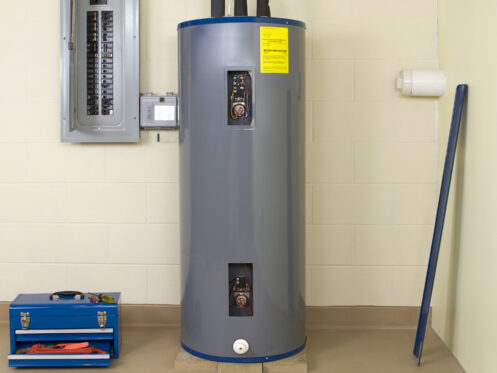
A traditional storage tank water heater is the most common type found in homes. Its operation is straightforward; it heats a specific volume of water and stores it in an insulated tank. When you turn on a hot tap, cold water enters the tank through the dip tube, pushing heated water from the top of the tank out to your faucet.
The system constantly maintains the water temperature, which results in standby heat loss. After you use a significant amount of hot water, the unit begins a recovery cycle to heat the new cold water in the tank. The tank’s size determines its storage capacity and how much hot water is available at once.
Gas Tank Water Heaters
Gas-powered models use a burner at the bottom of the unit. When the thermostat detects a drop in water temperature, it opens a gas valve, and an ignitor lights the burner. The flames heat the bottom of the metal tank, transferring heat to the water. Exhaust gases from combustion are safely vented through a flue pipe running through the center of the tank.
Electric Tank Water Heaters
Electric water heaters use one or two immersion heating elements, which are metal rods that heat up when electricity passes through them. A dual-element model typically has one element near the top of the tank and another near the bottom. The upper element activates first for a quick supply of hot water, and the lower element handles the bulk of the heating during recovery periods. Each element has its own thermostat.
What Controls Water Temperature and Pressure?
Managing temperature and pressure is crucial for safe and efficient operation. The thermostat is the primary control, allowing you to set the water temperature. A setting of 120°F is typically recommended to prevent scalding and reduce energy use. The thermostat constantly monitors the water and cycles the heating source to maintain this setting.
As water heats, it expands in a process called thermal expansion, which increases pressure inside the sealed tank. The temperature and pressure relief (T&P) valve is a safety device that protects the tank from rupturing. If internal pressure or temperature exceeds safe limits, the valve opens to release water and relieve the strain. Because these controls are essential for safety, professional installation and inspection are highly recommended.
How Does a Tankless Water Heater Work?
Unlike traditional models, a tankless water heater heats water on demand instead of storing it. When you turn on a hot water tap, a flow sensor activates a powerful gas burner or electric element. Cold water travels through a heat exchanger, where it is rapidly heated to the set temperature before continuing to the faucet.
The result is a virtually endless supply of hot water. However, the output is limited by the unit’s capacity, incoming water temperature, and flow rate. In colder winters, the unit must work harder to heat the colder water. Regular descaling maintenance is important because mineral buildup can clog the heat exchanger and reduce efficiency.
Why Water Heater Performance Changes Over Time
Over time, you may notice a decline in your water heater’s performance due to internal wear and tear. One of the most common issues is sediment buildup, which occurs when minerals settle at the bottom of the tank. This sediment layer can cause rumbling noises, reduce efficiency, and even damage the tank.
The sacrificial anode rod also deteriorates itself to prevent tank corrosion. Once it’s gone, the tank itself begins to rust. Heating components can also fail, leading to inconsistent temperatures, slower recovery times, and reduced output. Scheduling routine maintenance can help address these problems and extend your system’s life.
What Happens When You Turn on Several Hot Water Fixtures?
A water heater’s ability to handle simultaneous demands depends on its type and size. A traditional tank model relies on its stored capacity. For example, a 50-gallon tank has 50 gallons of hot water available. Running a shower, dishwasher, and washing machine at once can deplete this supply quickly, resulting in a cold shower.
A tankless water heater provides endless hot water but is limited by its flow rate, measured in gallons per minute (GPM). Each fixture has its own GPM demand. A low-flow showerhead might use 1.5 GPM whereas a dishwasher uses 1 GPM.
If the total demand from all fixtures exceeds the unit’s GPM rating, the water temperature may drop. This is why proper sizing by a professional is critical for both tank and tankless systems to meet your family’s needs.
When Should a Water Heater Be Professionally Evaluated?
Knowing when to call a professional can prevent a small issue from becoming a major one. It’s time for an inspection if you notice leaks, significant temperature fluctuations, or unusual noises like popping or banging. Other warning signs include discolored water, a reduction in hot water capacity, or a complete loss of hot water.
The team at Pacific Plumbing & Rooter Inc has over 40 years of combined experience inspecting, repairing, and replacing all types of water heaters. We provide long-term plumbing solutions to ensure your system runs safely and efficiently. If you’re experiencing issues with your water heater in Eugene, OR, contact us for a professional evaluation.
Water Heater Operation FAQs
It’s normal to have questions about how your water heater works. Here are answers to a few common inquiries from local homeowners.
The delay occurs because hot water must travel from the heater through your home’s pipes to the faucet. Cold water sitting in the pipes must be pushed out first, so a longer pipe distance means a longer wait.
No, a tank water heater cycles on and off. The heating elements activate only when the thermostat detects the water temperature has fallen below its set point or when cold water enters the tank after use. It does not run continuously.
For a balance of safety and efficiency, most manufacturers recommend a setting of 120°F. Higher settings increase the risk of scalding and lead to higher energy bills from increased standby heat loss.
This is often a sign of sediment buildup, which reduces the tank’s actual capacity. It can also be caused by a failing dip tube that allows cold and hot water to mix or a malfunctioning heating element in an electric model.