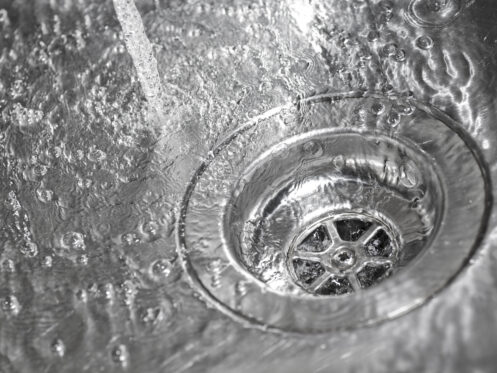
Standing over a slow drain, you can usually tell something’s off before water backs up. The sound changes first. Instead of a clean rush, you hear a hollow gulp or a lazy swirl. Sometimes there’s a faint odor that wasn’t there last week. Drains work quietly every day, so when they struggle, it’s worth paying attention.
As plumbers, we see clogs form from normal use, not neglect. Hair, soap, grease, and food build up little by little. Many slow drains stay manageable when caught early. Others signal trouble deeper in the line. Knowing the difference helps you decide what’s happening without tearing anything apart.
Unclogging Toilets
Toilet clogs tend to announce themselves fast. The water rises higher than usual and then drains slowly or not at all. We often hear a weak siphon sound instead of the usual flush. That tells us the flow is restricted somewhere in the trap or branch line.
Minor toilet clogs usually come from paper buildup or waste that didn’t clear fully. When we inspect, we check how the bowl refills and how the water level settles. If flushing sounds strained or inconsistent, the clog may still be present even after water drops.
Foreign objects change the situation entirely. When the bowl drains unevenly or the trap feels blocked solid, that usually means something shouldn’t be there. Those clogs behave differently and often need professional removal to avoid damaging the porcelain.
Unclogging Shower and Tub Drains
Shower and tub drains give early warning signs. Water pools around your feet and slowly creeps away. We often smell soap residue or notice hair clinging near the drain opening. That buildup narrows the pipe gradually.
When we remove stoppers during inspections, we usually find compacted hair mixed with thick soap residue. It feels slick and rubbery to the touch. That texture tells us water has been moving slowly for a while.
If drainage improves briefly after running water but slows again quickly, the buildup likely extends beyond the surface. That’s when deeper evaluation helps prevent recurring blockages.
Unclogging Bathroom Sink Drains
Bathroom sink clogs tend to form quietly. You might notice water backing up slightly and then draining with a faint gurgle. We often see toothpaste residue, hair, and soap collecting near the stopper assembly.
Under the sink, we check the trap and connecting pipes. Mineral deposits or residue lines along the fittings show how long water sat there. If the cabinet smells damp, that’s another sign that the flow has been restricted.
Sinks that drain unevenly from day to day often have partial obstructions. Those don’t always cause immediate backups, but they worsen with daily use.
Unclogging Kitchen Sink Drains
Kitchen drains behave differently from bathroom drains. When they clog, water often drains slowly and leaves a greasy film behind. We notice odors first, especially after warm water runs.
Grease solidifies as it cools, sticking to pipe walls. Food scraps then cling to that layer. During inspections, we feel traps coated with thick residue that doesn’t rinse away easily.
If water drains better briefly after running hot water, that usually means grease softened temporarily. Once it cools again, flow slows back down. That pattern often points to a buildup beyond the trap.
Unclogging Sewer Line
When we deal with a sewer line clog, the signs usually show up fast. Multiple drains slow down together, toilets bubble, and there’s often a strong odor near floor drains. Those clues tell us the blockage isn’t local. Trenchless sewer repair helps when the pipe itself is damaged but not collapsed. We access the line through cleanouts, avoiding major digging. Pipe lining works by coating the interior with a resin that hardens in place. The result is a smooth interior that restores flow and seals cracks without tearing up the yard.
Signs a Clog Is Deeper in the System
Some clogs affect more than one fixture. We pay attention when a sink backs up while the dishwasher runs, or when a tub gurgles as the toilet flushes. Those sounds tell us the air is struggling to move through shared lines.
Floor drains backing up or multiple slow fixtures usually indicate restrictions farther down the plumbing. We also watch how quickly water levels recover after use. Slow recovery often means the main path isn’t clear.
In these cases, surface-level clearing won’t resolve the issue fully. The obstruction needs proper access to avoid repeated problems.
Why Chemical Cleaners Often Make Things Worse
We can usually tell when chemical cleaners have been used. Pipes may show discoloration or softened joints. The smell lingers long after the water clears.
Those products don’t remove buildup evenly. They burn through soft material and leave hardened residue behind. Over time, that weakens pipes and narrows the flow even more. Repeated use often leads to leaks or joint failure, especially in older plumbing.
When Drain Issues Affect Other Systems
Slow drains can impact more than plumbing. Standing water raises humidity in cabinets and bathrooms. We’ve seen moisture stains form near electrical outlets under sinks.
In crawlspaces, leaking drains contribute to damp conditions that affect framing and insulation. That moisture spreads quietly when drainage stays restricted. Addressing drain issues early helps protect areas you don’t see every day.
How We Evaluate Drain Conditions
During service calls, we listen, feel, and observe before touching anything. The sound of water moving tells us where restrictions might be. Pipe vibration shows pressure changes. We also check for residue patterns and moisture marks. Those details help us understand whether the problem is local or systemic. That approach keeps us from disturbing parts of the system that aren’t involved.
Hydro Jetting and Camera Inspections
When a clog keeps coming back, we usually do a camera inspection and use a hydro jetter to clear sewer line clogs. The camera shows us exactly what’s inside the pipe, whether it’s grease, roots, or collapsed sections. We watch the feed in real time and see where the flow stops. Hydro jetting then clears the line using high-pressure water that scrubs pipe walls clean. You can hear the difference when the line opens up, and water rushes freely again. This method doesn’t just punch a hole through the clog. It removes buildup completely, which helps drains stay clear much longer.
Your Local Drain Cleaning Experts
Drain problems don’t always start as emergencies, but they can become one if ignored. Knowing what your drains are telling you helps avoid that.
With decades of experience on staff, Pacific Plumbing & Rooter Inc provides drain cleaning in Eugene, OR, based on real conditions we see in your home. When drains stop behaving the way they should, call our team of experienced plumbers.